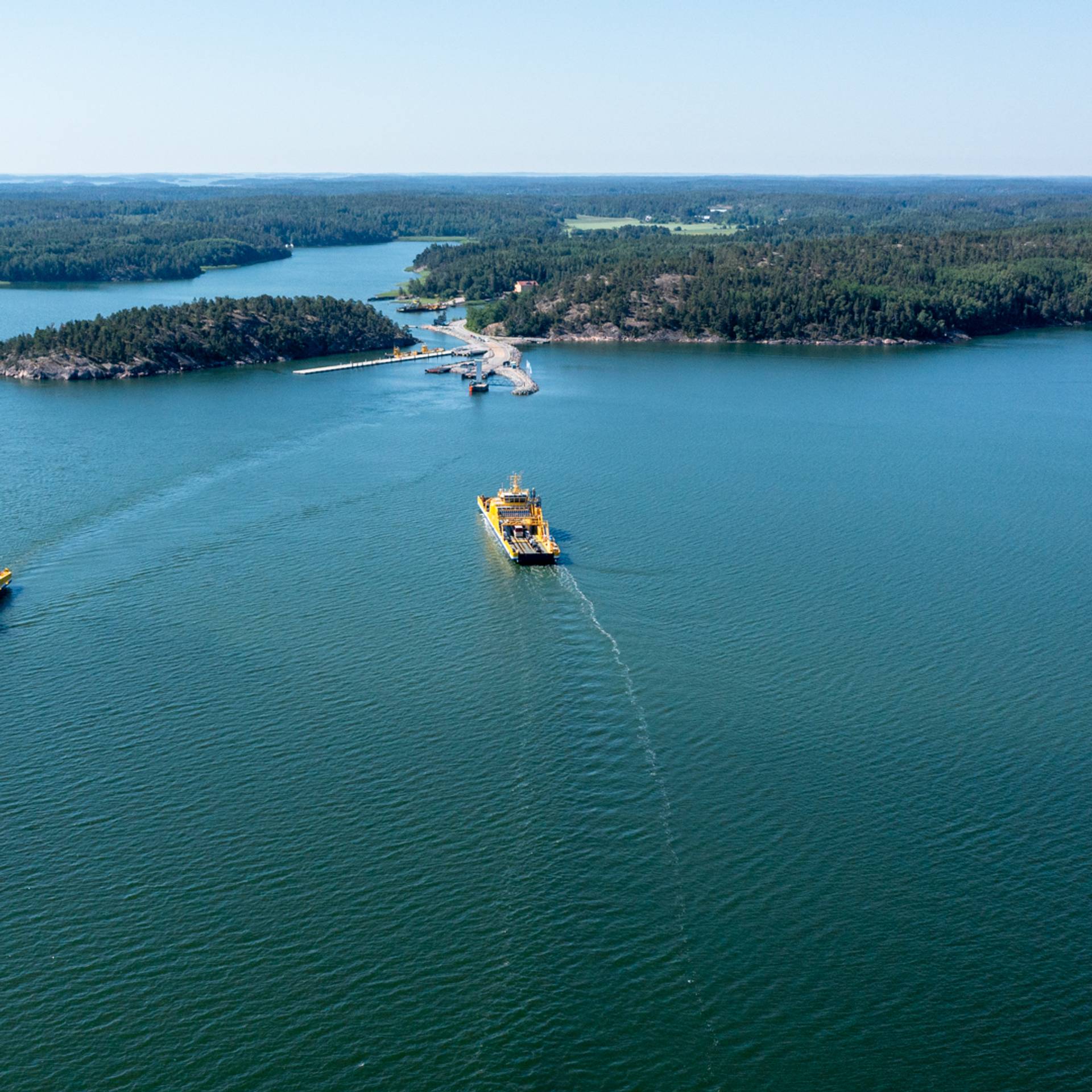
There are two main types of ferries operating in the Finnish archipelago:
1. The yellow road ferries
These iconic yellow ferries are part of Finland’s public road system. They connect larger islands across short stretches of sea, essentially acting as moving bridges. Because they are state-funded, they are always free to use and run frequently, often every 15–30 minutes.
One of the longest and most scenic of these trips is between Korpo and Houtskär, which takes about 40 minutes.
2. The connecting vessels
Connecting vessels serve smaller and more remote islands, often with fewer departures per day and longer travel times. Routes can range from quick 45-minute crossings to journeys of several hours, depending on the destination.
These ferries link islands like Seili, Brännskär, Utö, and Kökar. Most of them are also free of charge, especially if the islands have year-round residents, ensuring equal access to transportation across the region.
Some connecting vessels require advance booking, especially during high season. We'll go into those details in the next section.

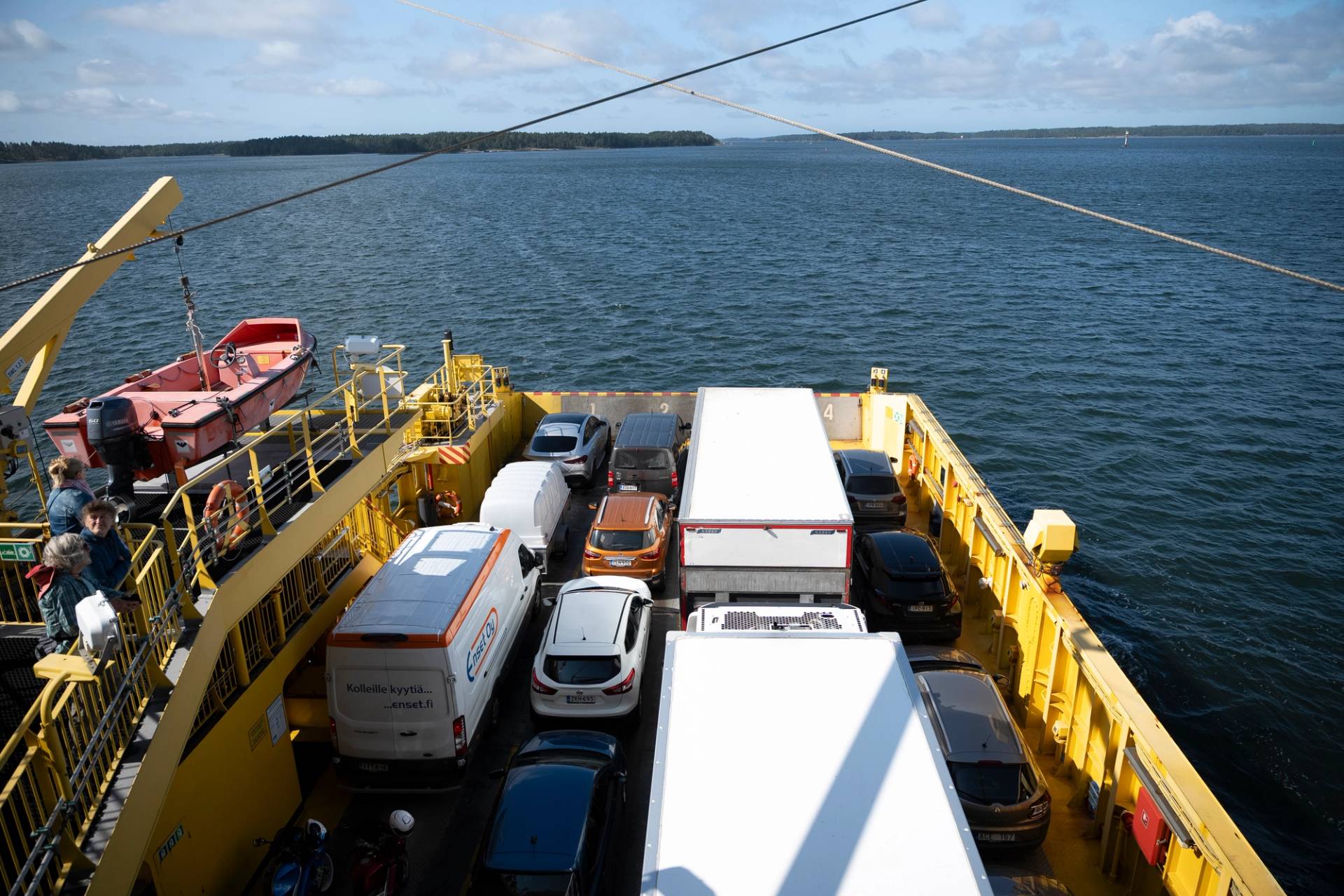
Passengers are permitted to walk on deck while the ferry is moving.
Planning a trip through the archipelago can feel a bit overwhelming at first. There are many different ferry routes, each with its own rules. But don’t worry! Here’s a breakdown of what’s free, what needs booking, and where to find the right information.
1. The yellow road ferries (Free, no booking needed)
All yellow road ferries, operated by Finferries, are completely free of charge. These ferries connect the larger, inhabited islands like Pargas, Nagu, and Korpo, and continue on to smaller islands that have road infrastructure and year-round residents.
There’s no possibility to book these ferries in advance. Just drive (or walk) on board. They operate on a rolling schedule throughout the day. Most of the time, the wait is short, even during summer.
2. The connecting vessels (Mostly free, require booking)
Many smaller islands in the outer archipelago are home to year-round residents. This means they are served by publicly funded connecting vessels, which are free of charge. These ferries take you to destinations like Utö, Brännskär, and Pensar. Most of them are also yellow with blue details, making them easy to recognize.
These vessels require advance booking, even though they are free of charge. You can book and view timetables on Finferries.fi.
3. Ferries that are not free of charge
There are three routes that operate on a paid basis. These are typically private or semi-private ferry lines:
The Archipelago Line (from Turku to Seili and Nagu)
→ Tickets can be bought on board and in advance online.
M/S Östern (from Nagu to Seili and Hanka)
→ Tickets are paid on board. No advance booking possible.
The ferry between Mossala (Houtskär) and Dalen (Iniö)
→ This is bookable in advance and requires a ticket.